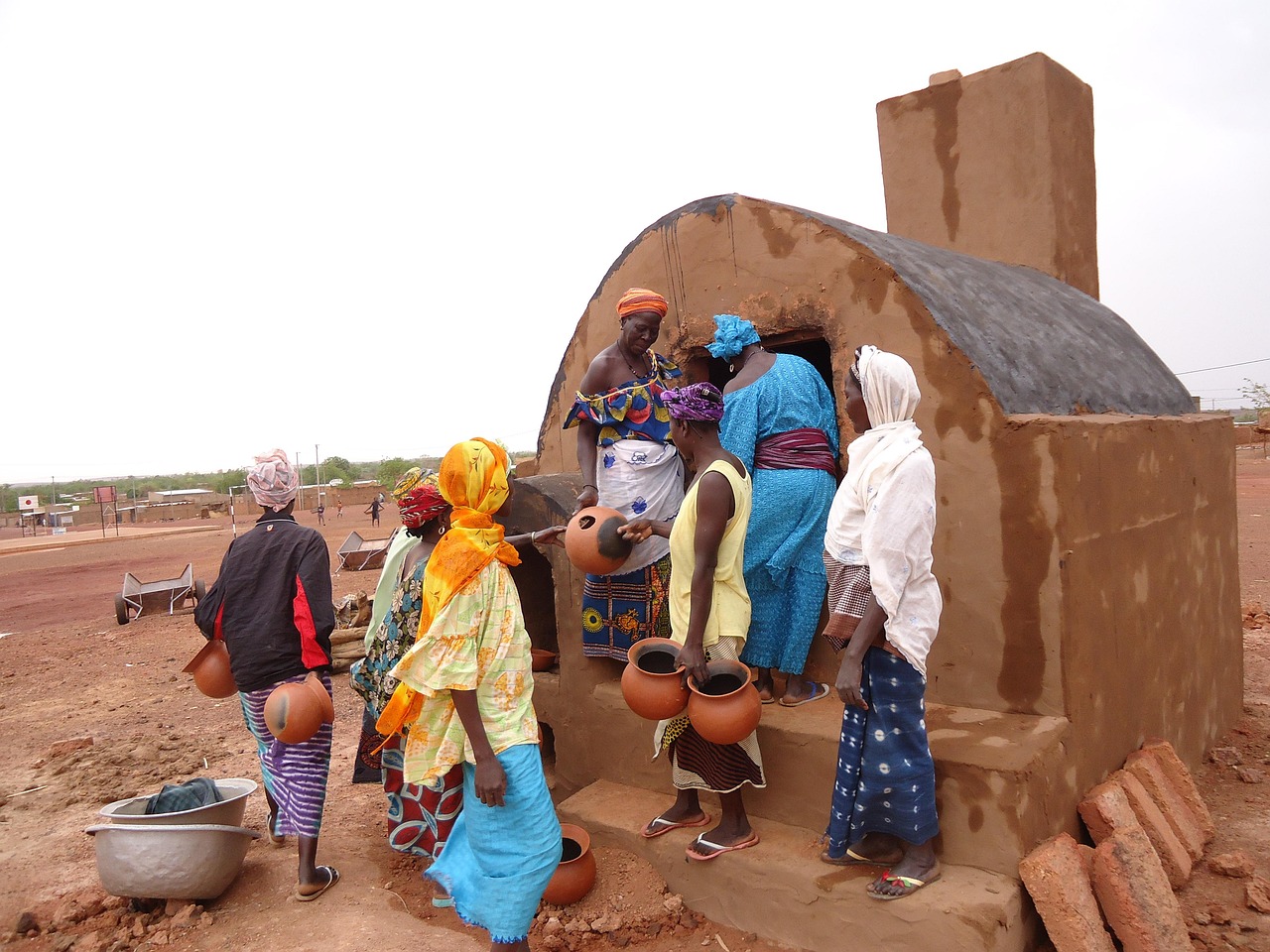

From the reports «After Decades of Drought, Water Is Rising in the African Sahel«, of Fred Pearce, published at Yale Environment360, and «Two decades of human- and climate-induced groundwater storage shifts in Brazil«, from Augusto Getirana, Clyvihk Renna Camacho, Maria Antonieta A. Mourão, and Otto Corrêa Rotunno Filho, published at Science Advances.
Across both Brazil and the African Sahel, groundwater systems are undergoing profound transformations driven by the combined influence of climate‑related atmospheric changes and human land‑use practices — though in opposite directions. In Brazil, reconstructed groundwater data show widespread declines in storage, including years of zero recharge in major aquifers. These trends are closely tied to climate variability: extreme droughts and the strong 2015–2016 El Niño event reduced precipitation and shifted long‑term groundwater trends from stable or positive to clearly negative across interior basins. The atmospheric driver here is the altered behaviour of large‑scale climate oscillations, which modulate rainfall, evapotranspiration, and surface–groundwater interactions. Human pressures — agricultural expansion, deforestation, and intensified pumping — amplify these climate‑driven deficits, reducing infiltration and increasing water demand.
In contrast, the Sahel is experiencing a marked rewetting, with rivers, wadis, lakes, and aquifers refilling after decades of drought and water tables rising more than four meters in places. The dominant atmospheric driver is the strengthening of the West African monsoon, linked to North Atlantic warming caused by global heating and by the reduction of sulphate aerosols that once cooled the ocean. This warming has drawn the monsoon farther north and greatly increased the frequency of powerful Mesoscale Convective Systems, which now deliver most of the region’s rainfall. These intense storm clusters produce destructive downpours but also rapid infiltration into aquifers, aided by compacted soils and land‑use changes that increase run-off.
Human activity interacts differently with climate in each region. In Brazil, land‑use change reduces recharge: intensive agriculture, forest loss, and high evapotranspiration limit the ability of rainfall to reach aquifers. In the Sahel, however, drought‑induced soil crusting, the spread of shallow‑rooted crops, and the abandonment of large irrigation schemes have unintentionally increased run-off and infiltration, reinforcing the hydrological impact of the strengthened monsoon. Local restoration efforts — traditional water harvesting, farmer‑managed tree regeneration — contribute at smaller scales but do not drive the regional trend.
The consequences diverge sharply. Brazil faces severe groundwater depletion, with some aquifers showing patterns similar to heavily over-exploited systems in other parts of the world. The Sahel, meanwhile, is seeing ecological and agricultural revival: wildlife returning, millions of naturally regenerated trees, and renewed small‑scale irrigation fed by replenished wells. Together, the two cases illustrate how climate‑driven atmospheric shifts — monsoon intensification in the Sahel, drought‑enhancing oscillations in Brazil — can reshape groundwater systems, and how land‑use choices can either exacerbate or reinforce these climate impacts.