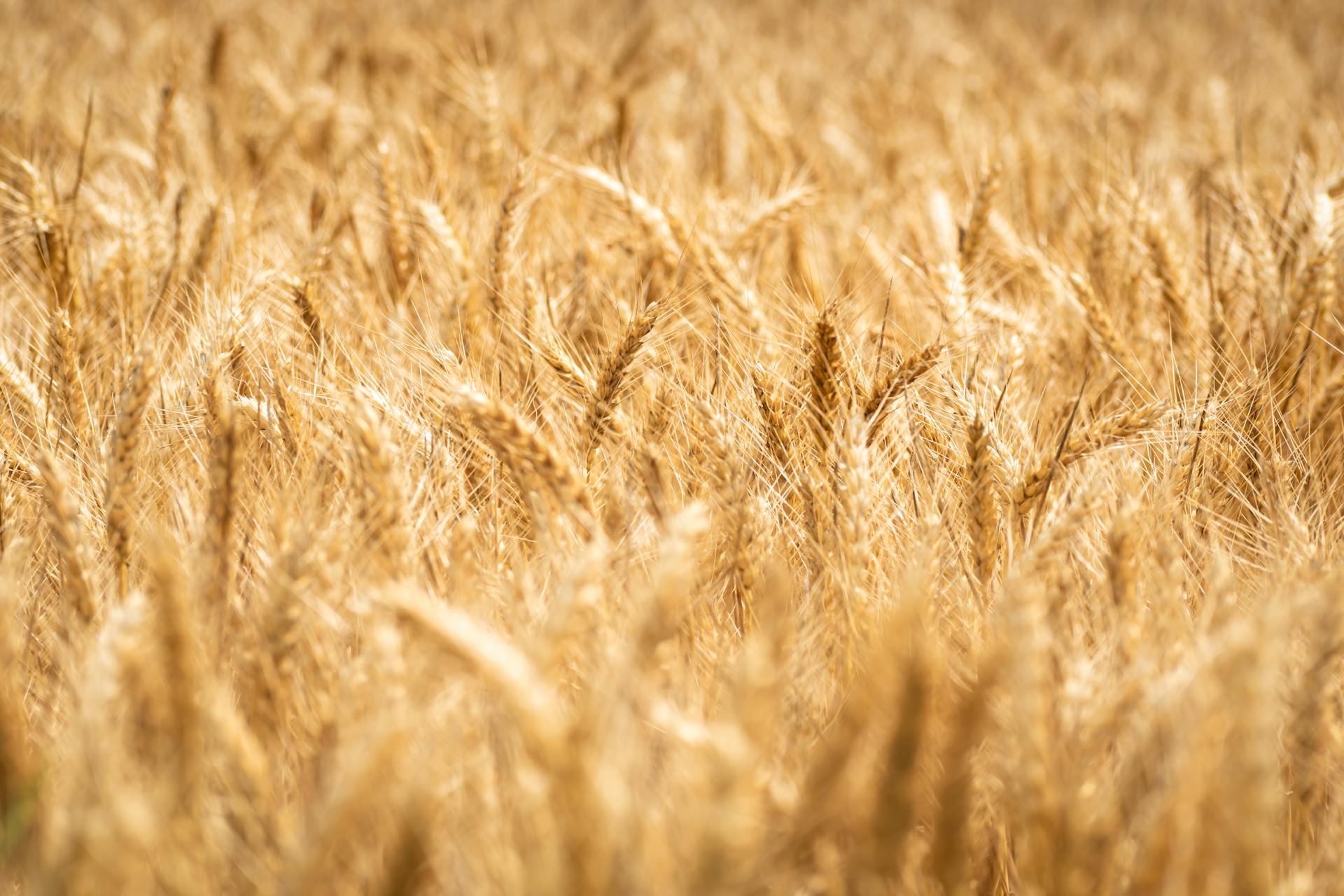

From the report «Impacts of Humic Acid on Growth and Yield of Wheat: A Review«, from Mohammad Sadiq Salihi, Hamdullah Hamim, and Sultan Mohammad Serat, published in the Journal of Natural Science Review of Kabul University.
Humic acid (HA), as described in the review, is a structurally complex fraction of soil humus arising from the “physical, chemical, and microbiological transformation of biomolecules” and functioning as a key regulator of soil physicochemical processes. Its high density of carboxylic and phenolic functional groups underpins its capacity to chelate micronutrients, buffer pH, and enhance cation exchange capacity, thereby improving nutrient mobility and root–soil ion fluxes. The article emphasizes that HA “improves nutrient availability and impacts other important chemical, biological, and physical properties of soils”, particularly in systems degraded by continuous chemical fertilization or affected by salinity and climate‑induced stress.
At the eco‑physiological level, HA enhances wheat growth by stimulating cell division and elongation, improving root system architecture, and increasing photosynthetic efficiency. The review reports substantial increases in “shoot length (18%), root length (29%), shoot dry weight (76%), root dry weight (100%), and chlorophyll content (96%)” following HA application. These responses reflect improved nutrient uptake—especially Fe, Mn, Zn, and Cu, whose leaf concentrations were “considerably affected by the humic substances treatments”—and enhanced metabolic activity driven by greater chlorophyll content and assimilatory capacity. The article attributes these effects to HA‑induced improvements in root development and nutrient absorption, which “caused improvement of roots of wheat resulted in increases the photosynthesis rate and rapid growth”.
Yield formation benefits from HA through improved spike morphology, assimilate partitioning, and nutrient‑use efficiency. The review documents increases in “spike length (14.66%), number of spikes m⁻² (28.73%), number of spikelets per spike (23.52%), and 1000‑grain weight (23.90%)”. Grain yield gains range from moderate (10–20%) to very high under rainfed or nutrient‑limited conditions, where HA increased yield by “46.9% compared to the control”. Several studies cited in the review show that HA combined with nitrogen or phosphorus fertilizers enhances nutrient‑use efficiency and can “reduce up to 50% of fertilizer expenses”, underscoring its agronomic and economic relevance.
Edaphologically, HA improves soil structure, increases water retention, enhances micronutrient solubility, and supports biological activity—functions that are particularly important in calcareous, saline, or chemically degraded soils. The article stresses that global wheat production is increasingly constrained by “industrialization, global warming, and heat stress” and that HA offers a sustainable pathway to restore soil fertility while reducing dependence on synthetic fertilizers. As the review concludes, HA is “a sustainable soil conditioner that reduces the adverse effects of chemical fertilizers used in the soil” and is especially valuable for wheat‑producing regions facing soil degradation and climate stress.
| Parameter | Without Humic Acid (Control) | With Humic Acid | Evidence from article |
|---|---|---|---|
| Shoot length | Baseline | +18% | “shoot length (18%)” |
| Root length | Baseline | +29% | “root length (29%)” |
| Shoot dry weight | Baseline | +76% | “shoot dry weight (76%)” |
| Root dry weight | Baseline | +100% | “root dry weight (100%)” |
| Chlorophyll content | Lower | +96% | “chlorophyll content (96%)” |
| Plant height | 77 cm (example control) | 89 cm | “89 cm than the control (77 cm)” |
| Flag leaf area | Lower | Increased | “increased plant height, flag leaf area, and chlorophyll content” |
| Micronutrient uptake (Fe, Mn, Zn, Cu) | Lower | Significantly higher | “considerably affected the leaf Fe, Mn, Zn, and Cu contents” |
| Spike length | Baseline | +14.66–15.56% | “spike length (14.66–15.56%)” |
| Spikes per m² | Baseline | +28.73% | “number of spikes m⁻² (28.73%)” |
| Spikelets per spike | Baseline | +23.52–29.03% | “spikelets per spike (23.52–29.03%)” |
| 1000‑grain weight | Baseline | +23.90% | “1000 grain weight (23.90%)” |
| Grain yield | 2338 kg ha⁻¹ (example control) | 2540 kg ha⁻¹ | “grain yield (2540 kg ha⁻¹) … control (2338 kg ha⁻¹)” |
| Yield under rainfed conditions | Low | +46.9% | “increased rainfed wheat yield by 46.9%” |
| Biological yield | Lower | +18–36% | “biological yield (18–36%)” |
| Dry matter yield | Lower | +15–25% | “dry matter yield (15–25%)” |
| Fertilizer requirement | High | Up to 50% reduction | “reduce up to 50% expenses of fertilizer use” |